Beyond Left and Right: A Life-Systems Politics for Our Time
By Dr. Emily Samuels Ballantyne | Magical Farm Tasmania
There comes a moment when the old labels stop making sense. Left. Right. Progressive. Conservative. None of them speak to the kind of politics I live, breathe, and grow.
I wrote my PhD in a garden while institutions told me my work was too plural, too holistic, not theoretical, didnt have a business model etc. For over a decade, I brought projects to life in small cracks between funding rounds and bureaucratic resistance. I created real impact, but always from the edges. I’ve joined herbal circles, I’ve made tea for Aboriginal artists and sat with their stories. I’ve worked in Italian community gardens and European Union policy forums in collaboration with a rebel design studio, sailed on an anti-whaling boat, and sat in women’s circles under stars.
While others pursued careers in law or business to change the system from within, I chose another path: I became a systems theorist, regenerative designer, yoga teacher, a kinesiologist, a sword fighter who incorporated ancient martial arts approaches, a biodynamic practitioner, astrologer, a folk natural builder specialising in Cob, a folk herbalist, Jungian practitioner and a budding anthroposophical philosopher. I studied ancient cultures, joined women's circles and learned from land and lineage. It wasn’t the conventional way but it was deeply disciplined, rooted in care and a fierce belief in alternative life systems.
The cost has been real. I’ve been rejected by reductionists in universities, dismissed by NGOs who shuffled paper or were too focussed on resistance, and told again and again that my work doesn’t “fit.” Not even so-called progressive spaces could hold me. And yet, I’m still here. Not because I was welcomed, but because I stayed true to my garden politics.
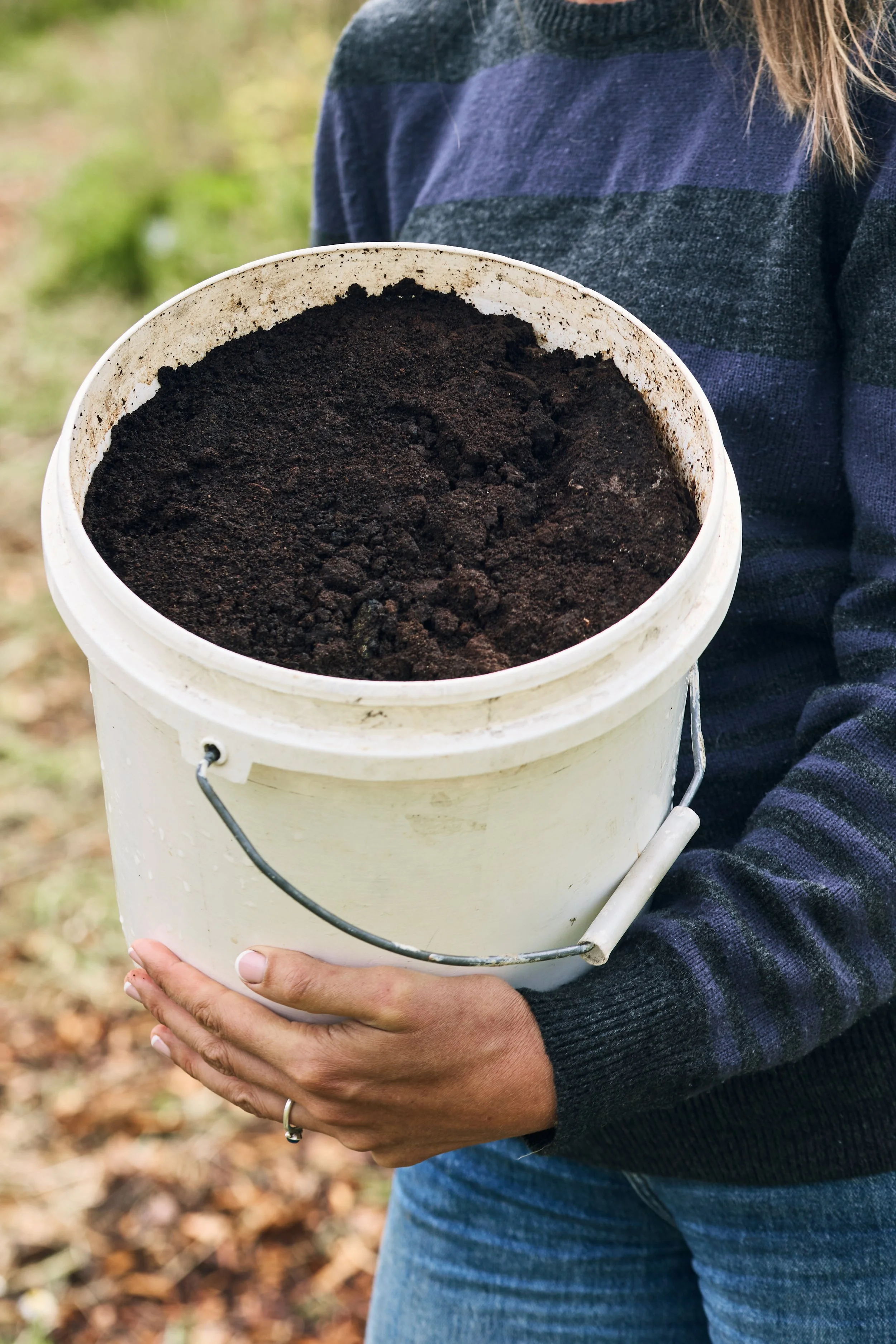
Still, I rise. From the compost of rejection grows my conviction: we need a new way. I’m not here to climb the ladder I’m here to dismantle it and plant something different in its place. I campaign for a politics of decommodification, of beauty, of imagination, a politics rooted in gardens, in kinship, in Gaia. A politics that honours not just what we produce, but how we live.
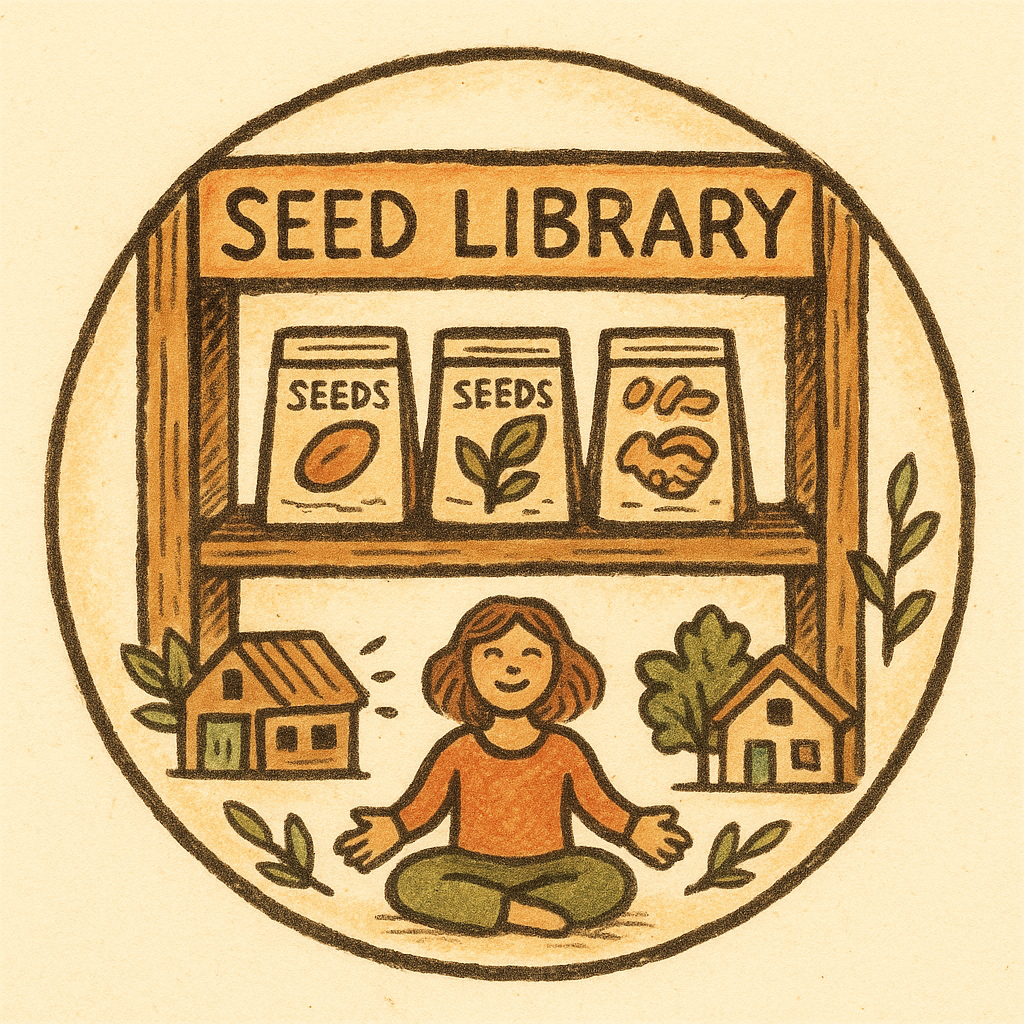
Image by Regen Era Design
And so I offer this not from a place of institutional power, but from the soil. I’ve felt the failings of the system in my own body and I know I’m not alone. What we need now is not reform. We need regeneration.
I’m coming out not as left or right, but as a life-systems political being, so my politics isn’t about opposition, it’s about composition. And Poli means People, its about Humans in place. It’s not about taking sides. It’s about taking root… I am interested in problem solving, creative dialouge with people from all walks of life.
This is a politics grounded in the soil, in care, in cycles of regeneration. I believe that the most important political acts happen in kitchens, community gardens, forest clearings, and co-designed circles where decisions are shaped by those who live their consequences. It’s a politics of collaboration not ideology and its purpose is not performance but transformation.
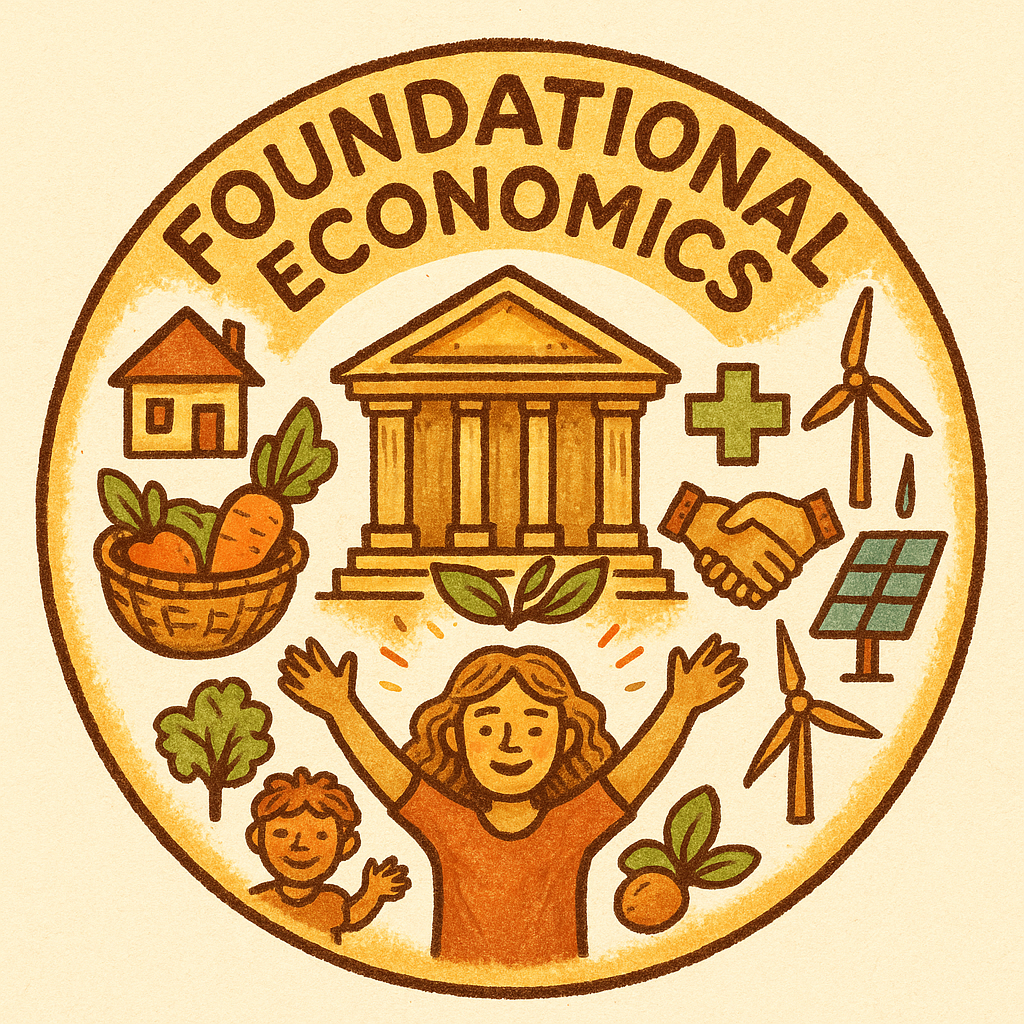
This is what I call foundational economics and convivial governance: a reclaiming of the essentials food, energy, housing, care, learning as public, shared, and regenerative. The term “economy” comes from the Greek OIKOS, meaning “the household,” a lineage brought forward beautifully by Gibson-Graham in their feminist reframing of economic life. In their work, the economy is not a machine, but a garden, tended through relationships, reciprocity, and responsibility.
This is not a fringe idea. It is already being practiced, quietly, powerfully by people across the world. Tyson Yunkaporta reminds us that Indigenous systems of governance are not based on power-over, but on kinship, pattern, and place. Joanna Macy teaches that the Great Turning begins with seeing with new eyes, with feeling the grief of the world and choosing to act from love, not fear. Helena Norberg-Hodge offers a path of local futures, where real wellbeing arises from reweaving local food systems, community agency, and deep connection to place.
This is the politics I practice every day at Magical Farm Tasmania. It is not perfect. But it is alive.
It listens… It grows…It heals…I’m no longer interested in polarised debates that harden the heart and distract from the work.
The real question is not who’s right, but what is sacred? What are we growing, together? What do we want to root, repair, and regenerate?
This is not about opting out of the system.
It’s about composting the old to nourish the new. This is sacred activism. This is a politics of love, for ourselves, each other, and the Earth. It begins where all true economies do: at home, in the OIKOS and from there, we rise…
About the Author
Dr. Demeter (Emily Samuels Ballantyne) is an eco-philosopher, regenerative farmer, and founder of Magical Farm Tasmania. With over 20 years of experience in community economies, ecological design, and grassroots policy innovation, she weaves together deep listening, land stewardship, and life-systems thinking. Her PhD, Con Viv: Designing Convivial Food Systems in Everyday Life, explores relational design as a tool for transformation. Emily writes, grows, and teaches from her farm, where politics is practiced through care, creativity, and sacred activism.