

“We weave ideas, scribe forward, align with life and create connection.”
— Dr Demeter | Emily Samuels-Ballantyne
Covering topics on Foundational Economics, Convivial Governance, Anthroposophic Philosophy & Everyday Regeneration in Tasmania
Overview
The Island Almanac is a living compendium of stories, tools and place-based examples that weave together foundational economics, anthroposophic wisdom and the rhythms of everyday life. Rooted in the soils of Tasmania and flowering from Magical Farm Tasmania. Across its pages you’ll find:
Practical essays on redirecting public and private wealth into community resilience
Anthroposophical reflections on seasonal rhythms, ritual and soul-led innovation
Tasmanian case studies from coastal hamlets to mountain valleys
Project spotlights on island-wide initiatives, from seed libraries to solar co-ops.
Living Architecture: A dynamic framework of interconnected practices, food, housing, energy, governance, culture, activism and economics that grows, adapts and breathes like an ecosystem, rather than standing as static policy or infrastructure. These seven pillars form the Living Architecture of Regen Era Design Studio & The Island Almanac: integrating heart, head & hands to power a truly regenerative future.
Food, Plants and Planets
Housing and Natural Building
Energy
Community Life, Learning & Culture
Sacred Activism
Convivial Governance
Regenerative Economic Design.

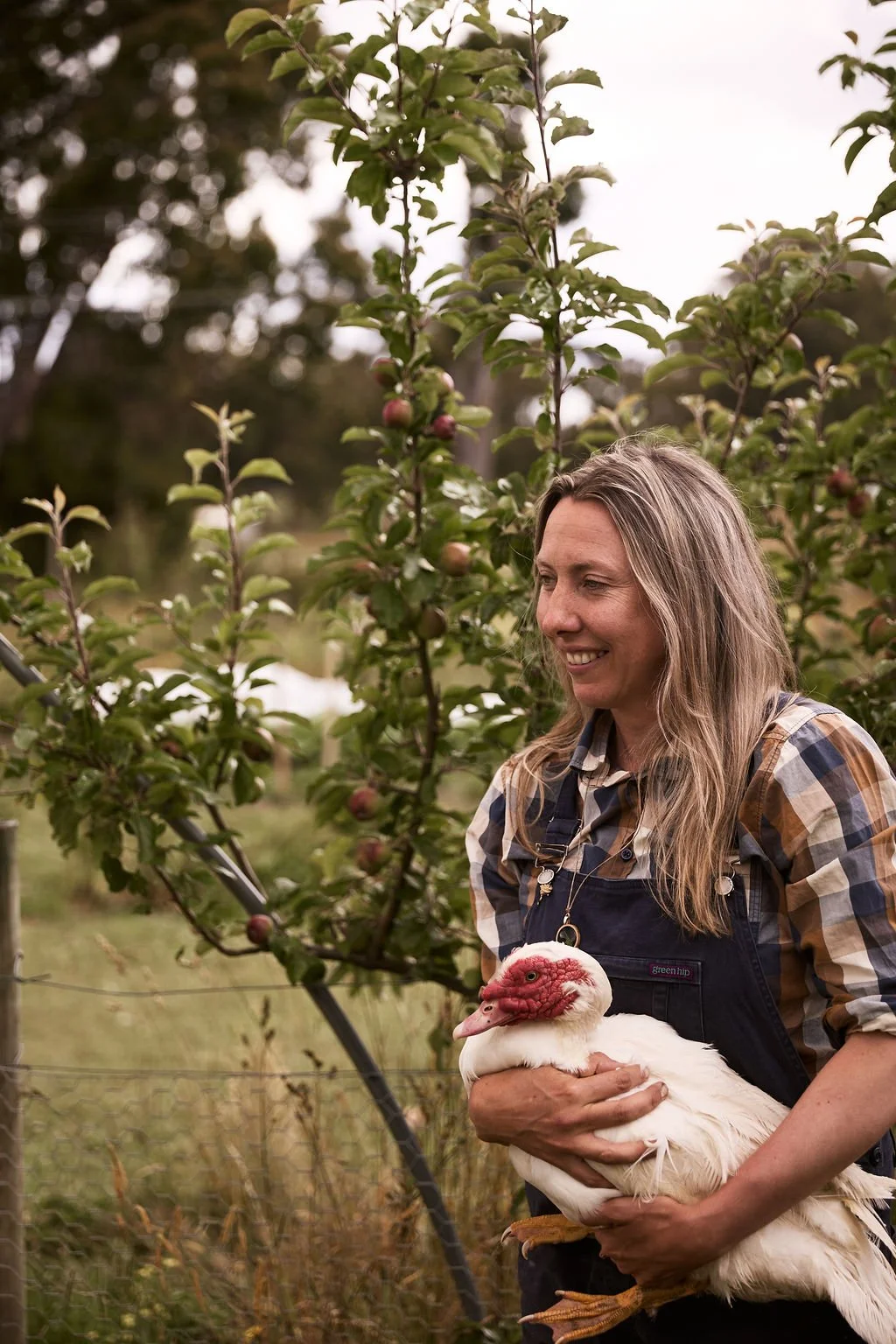
Scenario 2 for Salmon: Cut Through the Spectacle, Fund the Living Economy
Tasmania’s salmon debate has become an expensive, polarised spectacle that generates plenty of documents and conflict but too little practical change. The article proposes “Scenario 2”: a clear transition that reduces ecological pressure through published water thresholds and pre-agreed actions, while building a diversified, localised food and protein economy. Using Tasmania’s Agri Food ScoreCard, it highlights a core paradox: despite producing around 11 times more food than residents consume, Tasmania still sources about $1.97b (36.5%) of its food spend from outside the state. Capturing $1b/year of that leakage through hubs, cold chain, processing, cooperative logistics and public procurement could support roughly 5,000–7,100 jobs, matching salmon’s employment footprint with a more resilient model.
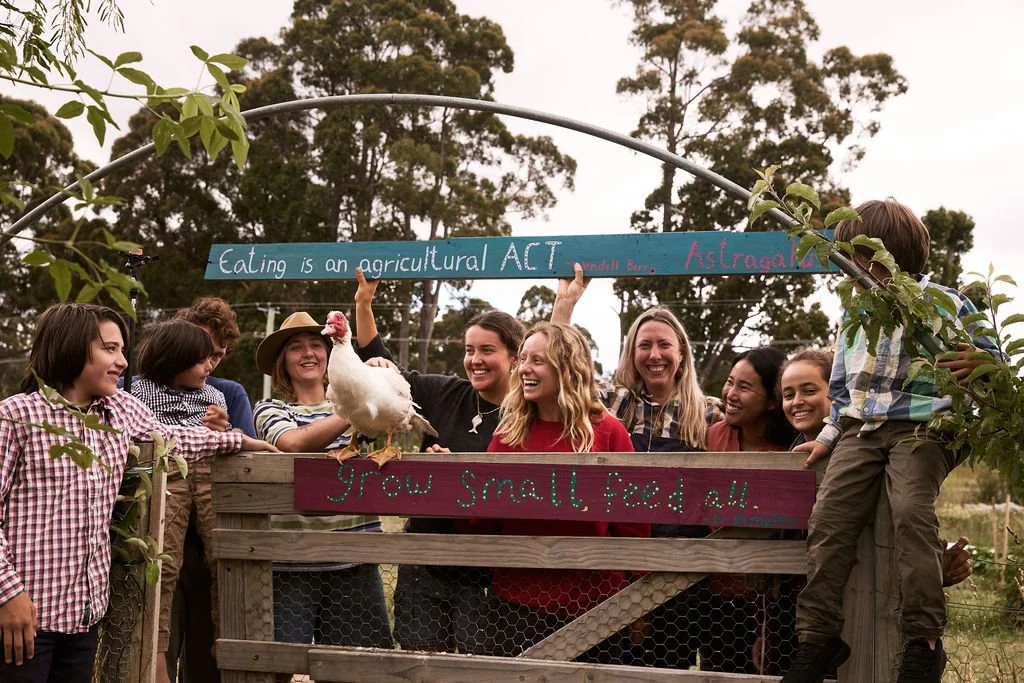
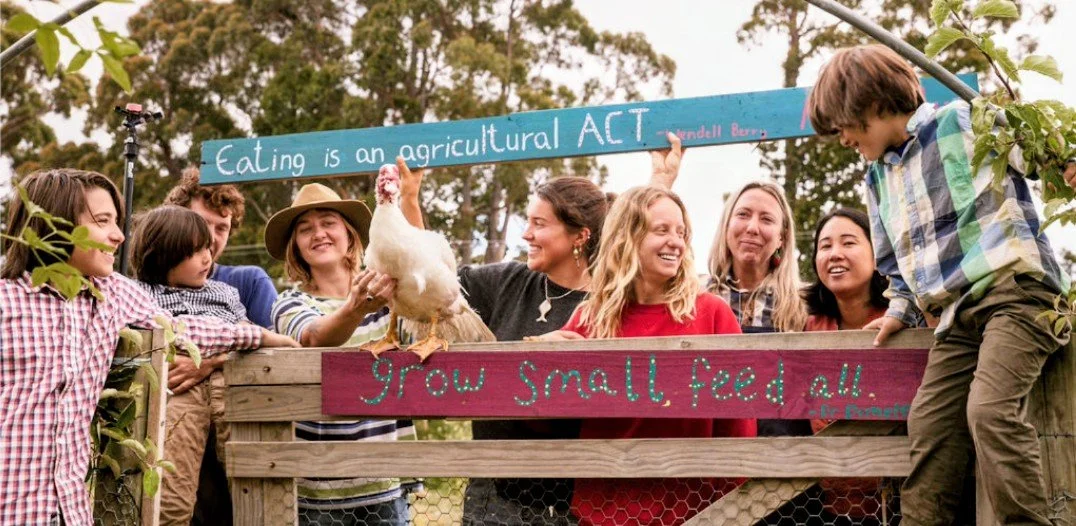
Local Duck Endorses 600 Million Dollar Food Policy. Treasury Still Considering the Data.
Grow Small Feed All has released an exclusive statement to Tasmanian Times calling for a 600 million dollar redirection toward local food procurement, regional processing infrastructure and small scale farm activation across Tasmania. The proposal responds to years of food resilience strategies that have generated reports and discussion without substantial on ground economic shift. Developed over seven years through a mycelium network of Tasmanian farmers, designers and community organisers, the campaign argues that existing expenditure can be redirected into local circulation rather than import dependency. A recent gathering at Magical Farm symbolically marked the moment, affirming that food policy is practical economic design rooted in soil and community.
Feed Tasmania from Tasmania: Living Policy for a Local Food Economy
Tasmania’s food future will not be secured by more strategy documents, but by direct, practical investment in the people and infrastructure that grow and distribute food locally. This article argues for “meaty” policy that pays small and medium farmers to feed their regions, mandates local procurement for public institutions, funds shared regional infrastructure, unlocks access to land, and provides patient community finance. By treating local food production as essential economic infrastructure, Tasmania can rebuild soil, strengthen regional economies and create a resilient food system grounded in place rather than paper.
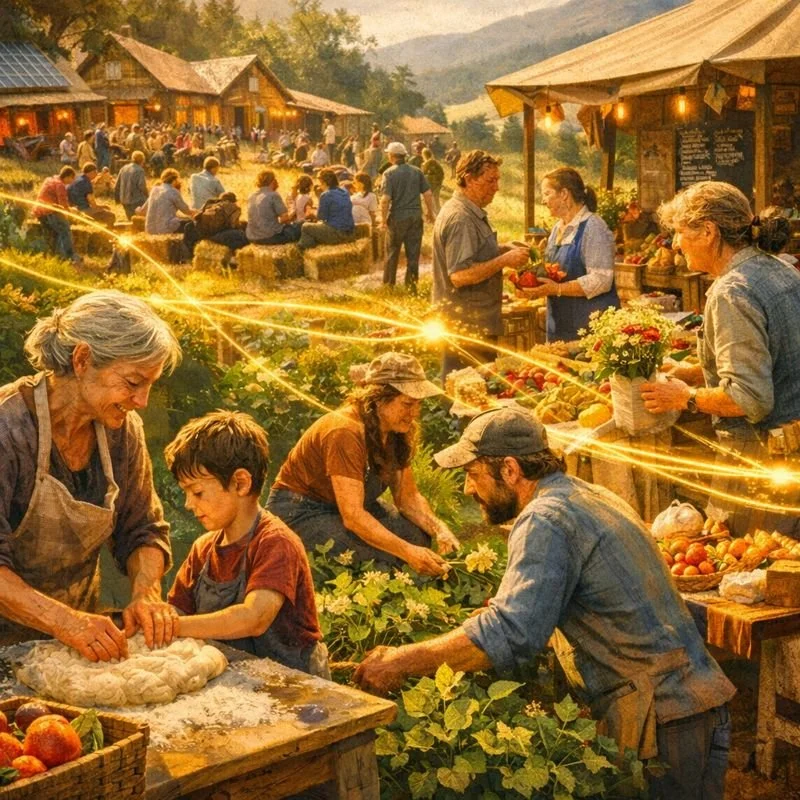
Open and Woven: Reweaving Local Life for a Living Future
Synopsis: Open and Woven: Reweaving Local Life for a Living Future
Dr Emily Samuels-Ballantyne / Dr Demeter | Regen Era Design Studio
This article traces how SLOC: Small, Local, Open and Connected design scenario by Ezio Manzini names a long-standing pattern of resilience found in healthy villages and neighbourhoods, and why it remains vital for Tasmania, Australia, and the communities Emily now re-enters in Europe. Drawing on Creative Communities research, Illich’s conviviality, and social permaculture, she argues that everyday life is a design field where soil, society, and spirit meet.
“Small” becomes intimacy and accountability, “local” a lived belonging, “open” the capacity to learn without losing boundaries, and “connected” (or woven) the mycelial intelligence that allows communities to exchange strength without being swallowed by larger systems. Emily diagnoses the cultural thinness produced by centralised food systems and shows how local growers, village rhythms, and seasonal literacy are eroded when food is abstracted from land and relationship.
From this lineage she introduces Con Viv, her living-systems design approach, and the Grow Small Feed All campaign, which aims to support micro farms and neighbourhood food networks through policy, micro-finance, and civic imagination. She emphasises that openness must be paired with equity to avoid gentrification and displacement, and that convivial systems strengthen dignity rather than extract value.
Holding an anthroposophic sense of society as a living organism, she invites designers, policymakers, activists, growers, and neighbours to treat daily life as a legitimate site of design, and to cultivate a woven future, grounded, porous, equitable: where community life becomes strong enough to hold us all.