

“We weave ideas, scribe forward, align with life and create connection.”
— Dr Demeter | Emily Samuels-Ballantyne
Covering topics on Foundational Economics, Convivial Governance, Anthroposophic Philosophy & Everyday Regeneration in Tasmania
Overview
The Island Almanac is a living compendium of stories, tools and place-based examples that weave together foundational economics, anthroposophic wisdom and the rhythms of everyday life. Rooted in the soils of Tasmania and flowering from Magical Farm Tasmania. Across its pages you’ll find:
Practical essays on redirecting public and private wealth into community resilience
Anthroposophical reflections on seasonal rhythms, ritual and soul-led innovation
Tasmanian case studies from coastal hamlets to mountain valleys
Project spotlights on island-wide initiatives, from seed libraries to solar co-ops.
Living Architecture: A dynamic framework of interconnected practices, food, housing, energy, governance, culture, activism and economics that grows, adapts and breathes like an ecosystem, rather than standing as static policy or infrastructure. These seven pillars form the Living Architecture of Regen Era Design Studio & The Island Almanac: integrating heart, head & hands to power a truly regenerative future.
Food, Plants and Planets
Housing and Natural Building
Energy
Community Life, Learning & Culture
Sacred Activism
Convivial Governance
Regenerative Economic Design.

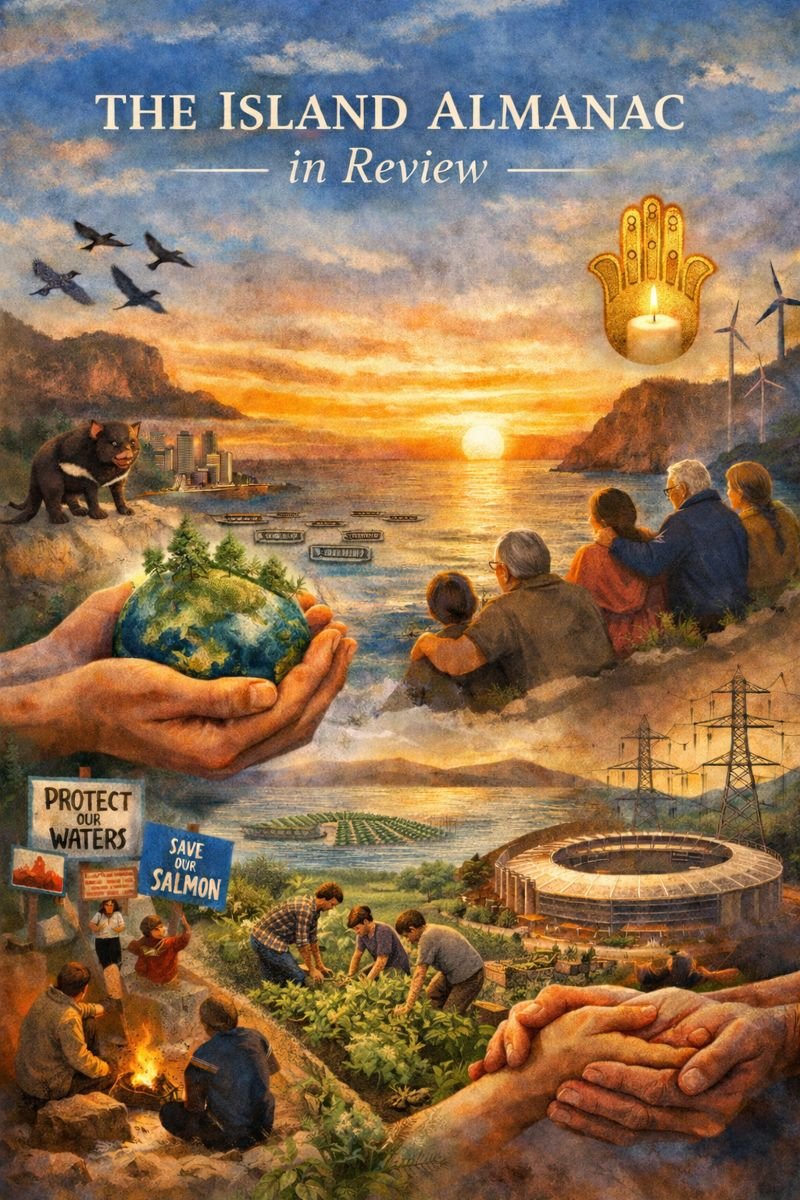
A Year of Reweaving: Notes from The Island Almanac, 2025
In 2025, The Island Almanac became a living record of a place under pressure, and a steady refusal to let pressure collapse us into binary thinking. Moving through the year’s rupture-points (from public grief and violence to contested megaprojects, salmon industry harms, energy transition conflict, and the quiet intensity of a widening mental health crisis), the writing traced a deeper pattern: when systems harden, people harden too, unless we deliberately rebuild the village layer of life, relationship, meaning, practical competence, and shared care.
Across essays on convivial governance, foundational economics, regenerative culture, and what I call Ecological Mind Activism, the Almanac argued for a shift from activism as constant alarm to activism as ecological intelligence, measuring effectiveness not only by what we oppose, but by what we can grow: real alternatives, replicable practices, and everyday lives less dependent on extraction. At its heart, this body of work offers a new narrative for Tasmania: not a fight for the “right side,” but a practice of reweaving, where grief becomes a doorway to repair, conflict becomes a catalyst for better containers, and the future becomes something we build together, one living pattern at a time.