The Fault Line: On Power, Peace, and the Performative Neutrality of the Positioned Middle
By Emily Samuels-Ballantyne | Dr. Demeter, Magical Farm Tasmania
There is a quiet violence in how power speaks of peace. It appears subtly, when degrees become shields against critique, and charges of "white privilege" are weaponised not for dialogue but to silence dissent and flatten complexity.
Across institutions and activist spaces alike, a pattern emerges: when truth disrupts strategy, or nuance unsettles curated narratives, the result is often suppression. Authentic voices are muted, creative solutions sidelined, and change indefinitely deferred.
We are living through geopolitical fracture and grief. Yet paradoxically, the loudest protests often concern faraway conflicts, while advocacy at home falls into silence. Local communities are sidelined in energy transitions, their lived wisdom replaced by glossy, top-down frameworks. Meanwhile, critical issues, housing, cost of living, local infrastructure, local farm regeneration remain painfully unaddressed.

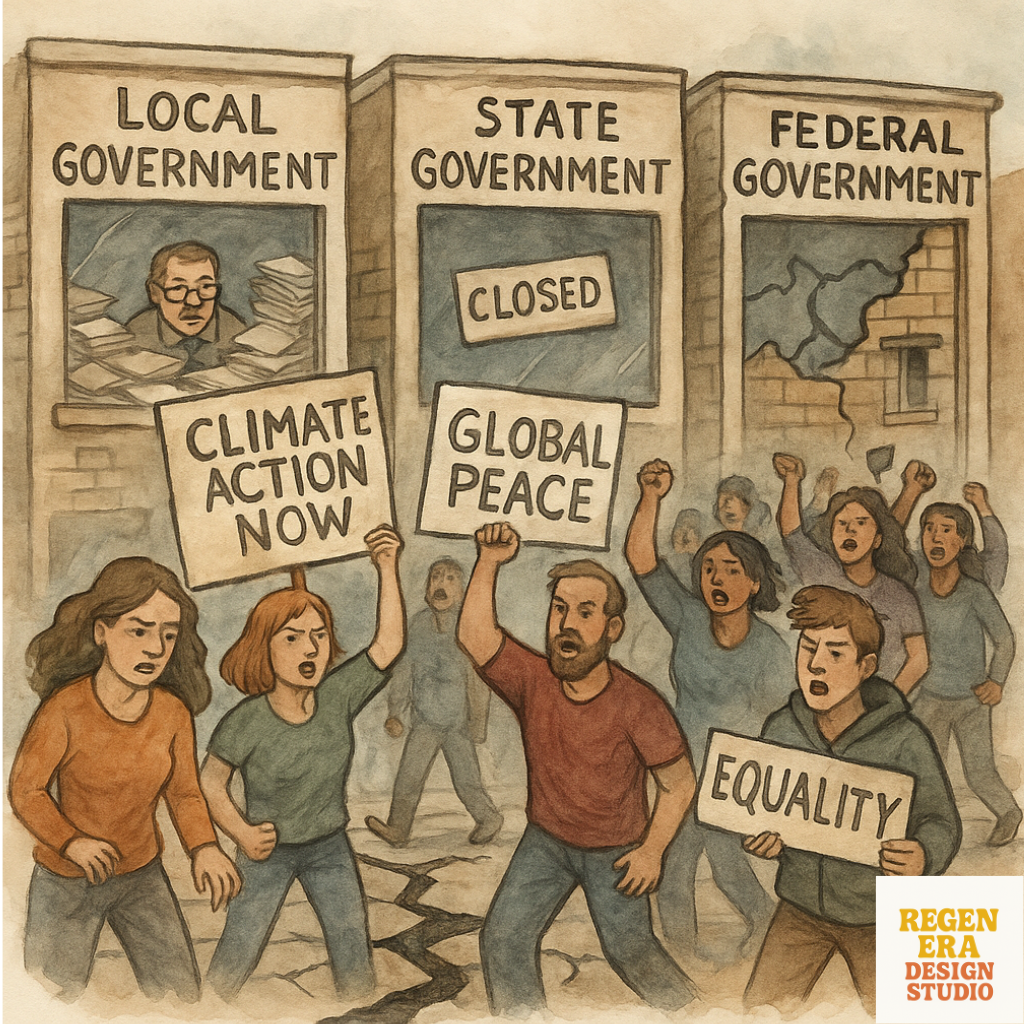
Local, state, federal governments and universities remain, to a large extent, stuck in business-as-usual. So much opportunity for meaningful work is wasted in bureaucratic churn and paper-shuffling. Meanwhile, many of those occupying senior roles in these institutions command disproportionately high salaries, with little structural expectation for place-based praxis or community engagement. Instead, the dominant outputs are reports, PR campaigns, conference papers, social media spin and internal performance metrics. This is not intelligent governance, it is madness disguised as productivity.
The national rollout of renewable energy must and will proceed, but without deep integration with food systems, community resilience, and life-giving social and ecological infrastructures, it risks becoming yet another technocratic exercise. Energy justice cannot be separated from food justice, housing justice, and the relational fabric of community life. We must stop designing policy in silos and begin weaving systems that support living economies, not just energy outputs.
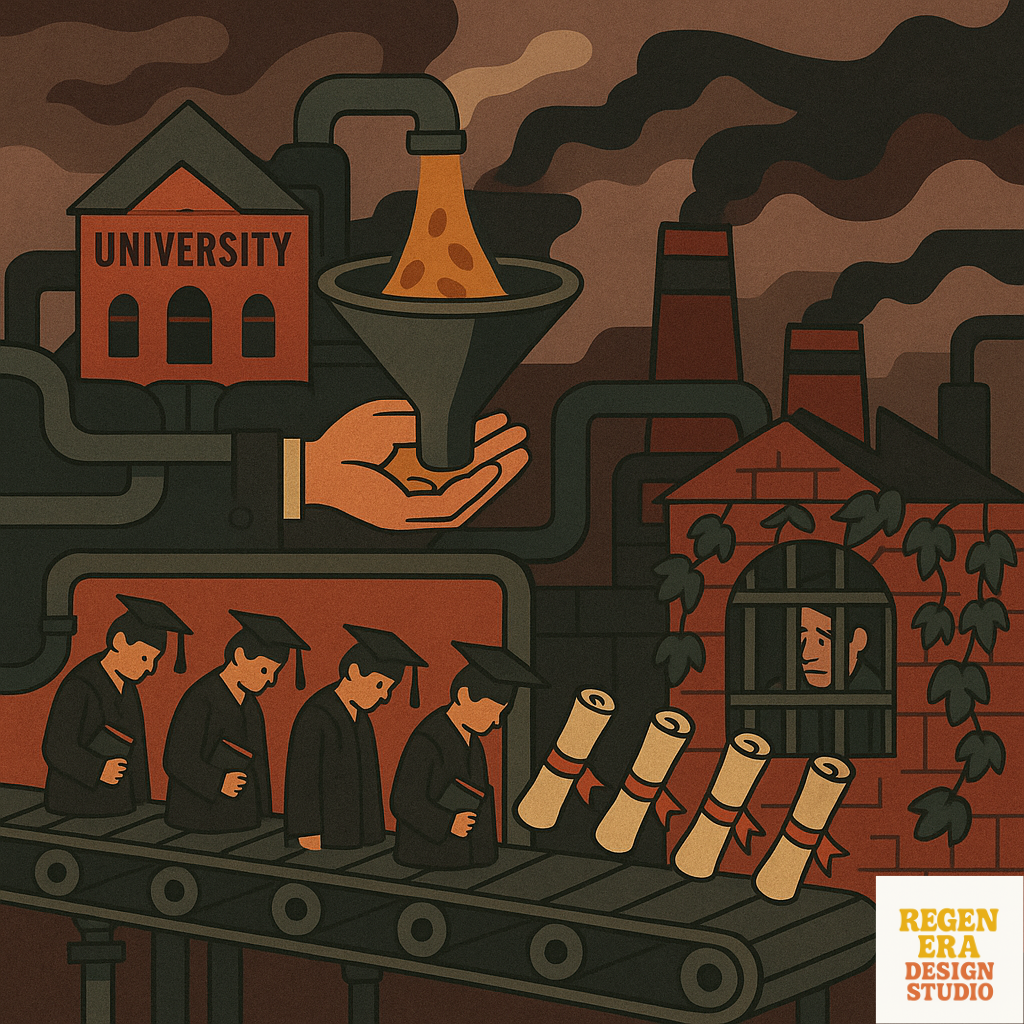
Our universities, once sanctuaries of intellectual rigour and nurturing creativity, are increasingly corroded by market-driven logic. The relentless casualisation of academic labour strips institutions of care, humanity, and genuine innovation, rendering educators precarious and disempowered. Similarly, public policy schemes, despite receiving billions in funding, remain captured by narrow interests. These initiatives are marketed as progressive yet conspicuously fail to incorporate genuine community sovereignty, resilience, or soul.
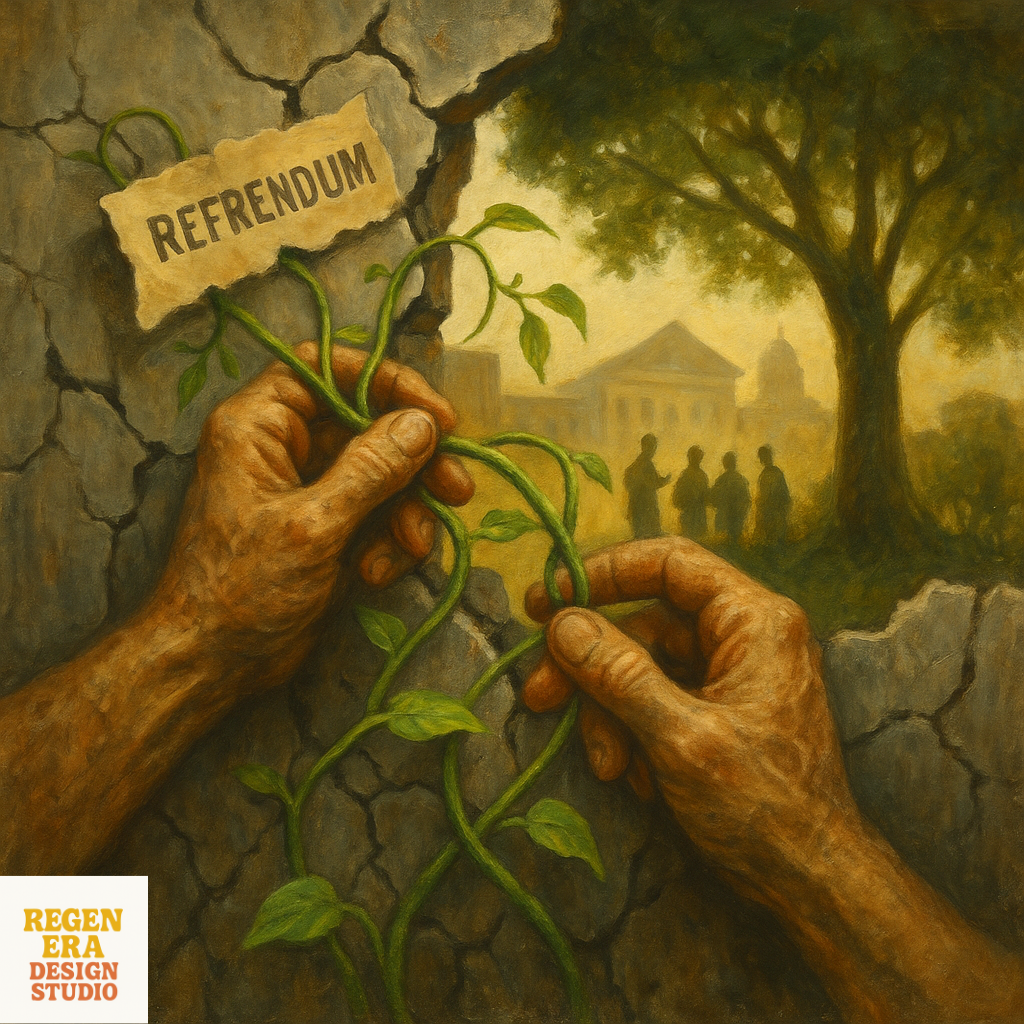
An illustrative example is the recent referendum seeking constitutional recognition for First Nations Peoples. We spent approximately $400 million on this national exercise, yet it yielded no binding voice, no meaningful structural reform, nor tangible reparations. Instead, the exercise left communities exhausted, spectacle eclipsed substance, and ultimately, society reverted quietly to business as usual.
Meanwhile, beneath the noise of international protest and performative activism, critical local issues remain neglected. The irony is stark and unsettling: passionate demands for global justice coexist comfortably alongside silence regarding immediate local injustices. The substance of true justice remains neglected, overshadowed by a theatre of morality in which roles are dictated by fear and reaction rather than genuine insight or systemic change.
I assert this gently yet unequivocally: We cannot forge a just society by replicating the very structures of alienation we seek to dismantle. Marx warned us of this. Resisting empire by adopting its tools, status hierarchies, shame tactics, and propaganda only deepens the wound.
And to dismiss our broken democracy as worse than no democracy at all is to overlook the urgent work of repair and reimagining. Design and imagination are not luxuries, they are the organs through which new worlds pulse into being, sketching bridges where institutions have collapsed and composting the debris of empire into fertile ground for renewal.

We can imagine a different way. We must be constructive.
Today, we stand collectively at a critical threshold. Our existing structures are undeniably hollow, and yet the emergent, life-affirming alternatives remain embryonic and uncertain. It is incumbent upon those of us who hold soil under our nails and stars in our vision to step forward, not to win divisive battles, but to weave together the diverse threads of our common humanity and shared future.
In doing so, we must emphasise several fundamental values:
Local communities genuinely matter.
Foundational economics and exploring hetrodox economics is key.
Dialogue is sacred and must be nurtured.
Silence does not always equate to complicity, nor is every act of protest inherently truthful.
The Earth urgently requires genuine stewardship, not merely new elites bearing superficial, greener branding.
I speak not to draw wedges but to ask for bridge building, to clearly name the oversight when those entrusted with power forget the ground upon which they stand. This conversation transcends traditional political binaries of left or right; it is fundamentally about depth, sincerity, and genuine responsibility.
Ultimately, let us commit to a future built not upon performative gestures but upon authentic presence.
Let our foundations be relationships, not righteousness…Let our power be rooted in presence, not performance….Let our future rise not from slogans, but from soul.